
Why We Bow in Martial Arts: Respect, Gratitude, and Readiness to Learn
When parents first watch a martial arts class, one tradition often stands out immediately: students bow.
They bow when entering the training floor. They bow to their instructors. They bow before working with a partner and again when the exercise is finished.
To someone unfamiliar with martial arts, bowing may seem overly formal or simply ceremonial. At Reveal Martial Arts, however, the bow has a clear and practical purpose. It teaches students how to show respect, express gratitude, exercise self-control, and prepare their minds for learning.
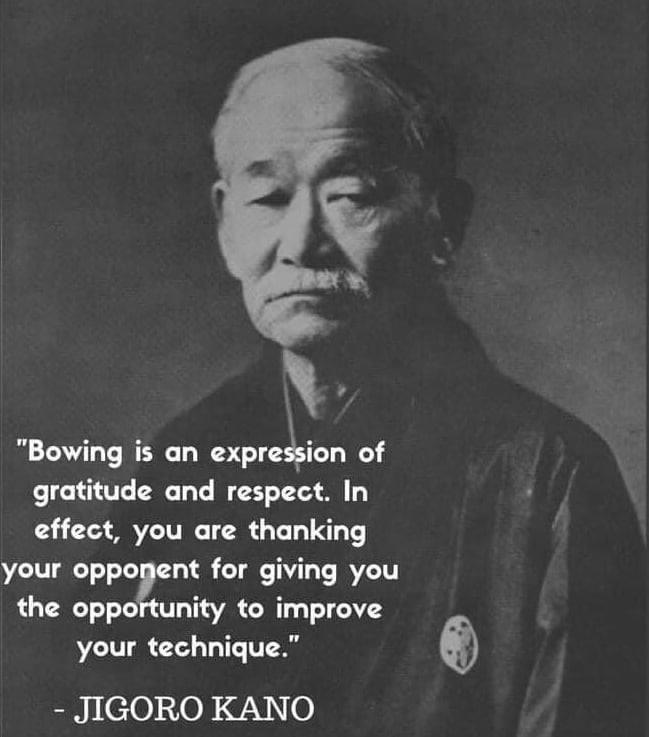
“Bowing is an expression of gratitude and respect. In effect, you are thanking your opponent for giving you the opportunity to improve your technique.”
That principle extends far beyond judo. It captures an important truth found throughout martial arts: we improve because other people are willing to train with us.
Bowing Is a Sign of Respect, Not Submission
A martial arts bow is not an act of worship, surrender, or inferiority. It is a traditional greeting, similar in purpose to a handshake.
When two students bow to one another, neither student is saying, “You are better than me.”
They are saying:
I respect you.
I trust you.
I will train safely with you.
Thank you for helping me improve.
That distinction matters. Martial arts training involves close interaction, physical contact, and controlled techniques. Students must be able to trust their partners to follow the rules and protect one another.
The bow establishes that expectation before the training begins.
We Cannot Improve Alone
A student can practice certain movements independently, but meaningful martial arts development requires partners.
Training partners help students improve their timing, distance, balance, coordination, speed, control, confidence, and decision-making.
Even during competition or sparring, the person standing across from us is not simply an enemy to defeat. That person is also helping expose our weaknesses and giving us an opportunity to grow.
A strong partner challenges us. A newer partner teaches us patience and control. A different body type forces us to adapt. Every person we train with gives us information that we could not gain alone.
That is why students bow both before and after working together.
The first bow says, “Let us train safely and respectfully.”
The second says, “Thank you for helping me learn.”
Bowing Marks the Beginning and the End
Children often move quickly from one activity to another without mentally making the transition.
They may enter class while still thinking about school, a video game, an argument with a sibling, or something that happened earlier in the day.
Bowing helps create a clear boundary.
When students bow onto the training floor, they are being taught to pause and mentally prepare themselves:
Class is beginning. Pay attention. Show effort. Follow directions.
When they bow off the floor, they recognize that the training session has ended and show appreciation for what they learned.
This simple physical action helps students practice focus and intentionality. Instead of wandering casually into class, they learn to enter with purpose.
Bowing Reinforces Courtesy
Courtesy is one of the central principles taught at Reveal Martial Arts.
Children are not born automatically understanding how to demonstrate respect in every situation. Respect must be explained, modeled, practiced, and reinforced.
Bowing gives students repeated opportunities to practice courtesy through action.
During every class, students learn to acknowledge their instructors, respect their training partners, wait for directions, control their behavior, show appreciation, and treat the training environment properly.
These habits may begin inside the martial arts studio, but they should not remain there.
A child who learns to pause, make eye contact, listen, and respectfully acknowledge another person is developing skills that carry into school, home, future employment, and adult relationships.
This is one of the reasons our kids martial arts program focuses on more than kicks, punches, and physical techniques. We are helping students build habits that shape how they carry themselves in everyday life.
Bowing Teaches Humility
Martial arts can make students stronger and more confident, but confidence must be balanced with humility.
A student may be faster, stronger, more experienced, or hold a higher belt than someone else. The bow reminds every student that these differences do not eliminate the obligation to show respect.
Higher-ranking students bow to beginners. Instructors bow to students. Competitors bow to one another regardless of who wins.
No one becomes too accomplished to demonstrate courtesy.
This is an important lesson for children. Achievement should not produce arrogance. Real confidence allows a person to remain respectful, teachable, and grateful.
Bowing Requires Self-Control
A proper bow is calm and deliberate.
Students do not bow sarcastically, carelessly, or while looking around the room. They stop, bring their body under control, focus their attention, and complete the gesture properly.
That brief moment requires discipline.
This becomes especially meaningful during sparring or competition. Students may feel nervous, frustrated, excited, or disappointed. Yet they are still expected to control their emotions and show respect to the other person.
A student bows whether they won or lost.
That teaches a principle much larger than martial arts: our emotions do not excuse disrespectful behavior.
Students learn that they can experience strong feelings while still choosing an appropriate response.
Why Students Bow to Their Instructors
Students bow to instructors to acknowledge the responsibility instructors have accepted.
An instructor is responsible for teaching correctly, maintaining discipline, protecting student safety, and helping each student improve. The bow recognizes that guidance.
At the same time, instructors bow back.
This is significant. Respect in martial arts is not intended to flow in only one direction. Instructors must also respect their students, their effort, their trust, and their willingness to learn.
The relationship carries responsibilities for both sides.
Students agree to listen, work hard, and behave respectfully. Instructors agree to teach patiently, maintain high standards, and provide a safe learning environment.
Why Students Bow to the Training Floor
When students bow while entering or leaving the training area, they are not bowing to the building or worshiping anything inside it.
They are acknowledging that the training floor is a place with a specific purpose.
It is a place where students come to work, learn, make mistakes, face challenges, and improve. Bowing reminds them that their conduct should reflect that purpose.
Different environments require different behavior. Children behave differently in a classroom than they do on a playground. They behave differently at a formal ceremony than they do at home.
The bow helps students recognize that when they step onto the martial arts floor, they are entering a structured learning environment.
One Tradition Across All Three Reveal Martial Arts Locations
Whether a student trains at our Southlake martial arts studio, our Alliance and Heritage Trace martial arts location, or our Haslet and Avondale martial arts studio, the meaning of the bow remains the same.
Across all three Reveal Martial Arts locations, students are expected to show courtesy, train safely, respect their partners, and approach every class with a willingness to learn. Bowing is one of the simple traditions that helps reinforce those standards every day.
For families searching for martial arts classes in Southlake, Alliance, Heritage Trace, Haslet, or Avondale, this is an important part of what makes martial arts education different from a typical sport or activity. Students are not only learning physical skills. They are learning how to carry themselves with discipline, gratitude, humility, and respect.
More Than a Tradition
Bowing may take only a second, but the lessons behind it are substantial.
It teaches students to respect the people who help them. It reminds them to approach learning with humility. It creates a clear beginning and ending to training. It encourages emotional control, gratitude, responsibility, and sportsmanship.
Most importantly, it teaches children that respect is not merely something we feel internally. Respect must be demonstrated through our actions.
At Reveal Martial Arts, we do not want students to bow simply because an instructor told them to do it. We want them to understand what the gesture represents.
Each bow carries a message:
Thank you for teaching me.
Thank you for training with me.
I will treat you safely.
I am ready to learn.
I respect this opportunity to improve.
That is why we bow.
Experience Reveal Martial Arts
Reveal Martial Arts has helped children, teens, and adults build confidence, discipline, respect, and practical martial arts skills since 2008.
