
Why Traditional Martial Arts Still Matters in a Fast, Comfortable World
We live in a world that keeps asking for everything to be faster.
Faster results.
Faster entertainment.
Faster rewards.
Faster progress.
We are constantly encouraged to make things easier, smoother, and more comfortable.
That may be convenient.
But convenience does not always build strong people.
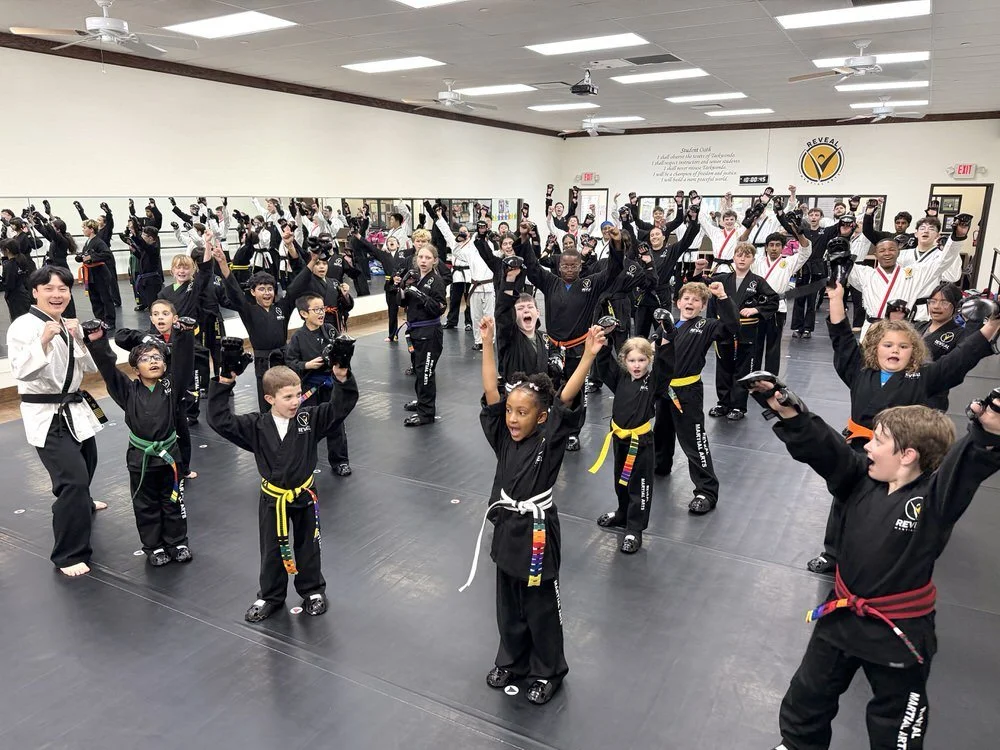
At Reveal Martial Arts, we still believe in traditional martial arts because the lessons behind it matter just as much today as they ever did.
Structure.
Discipline.
Respect.
Perseverance.
Self-control.
Confidence earned through effort.
These values are not outdated.
In many ways, they are exactly what children, teens, and adults need most right now.
Traditional Does Not Mean Outdated
One of the biggest misconceptions about traditional martial arts is that “traditional” means unrealistic, rigid, or disconnected from real life.
That is not what traditional martial arts is supposed to be.
Traditional training provides a foundation.
It teaches students how to:
- Build strong fundamentals
- Stay disciplined under pressure
- Control emotions and reactions
- Listen and follow instruction
- Show consistency over time
- Respect instructors, training partners, and themselves
- Earn confidence through real accomplishment
Those qualities are useful inside a martial arts studio.
But their greatest value often appears outside it.
At school.
At home.
At work.
In relationships.
During stressful moments.
When a difficult decision has to be made.
Children Do Not Need Everything to Be Easy
Parents naturally want life to go well for their children.
We want them to feel successful.
We want them to feel included.
We want them to feel confident.
But confidence does not grow because every obstacle is removed.
It grows when children face obstacles and learn they can handle them.
That is one of the greatest gifts traditional martial arts can provide.
Students are not handed progress simply for showing up once.
They are asked to practice.
To listen.
To repeat.
To accept correction.
To improve.
To keep going when something does not come easily.
At first, that can feel uncomfortable.
But then something changes.
A child begins to realize:
I can do hard things.
I can improve.
I do not have to quit just because I am frustrated.
That is the kind of realization that stays with them long after class ends.
Progress Should Mean Something
Modern culture often encourages instant recognition.
People want immediate confidence.
Immediate skill.
Immediate rewards.
Immediate proof that they are successful.
Martial arts does not work that way.
And we believe that is one of its greatest strengths.
Real progress requires:
- Repetition
- Consistency
- Effort
- Patience
- Humility
- The willingness to overcome mistakes
There is value in working toward something difficult.
There is value in waiting for a reward until it has been earned.
There is value in looking back and knowing:
I did not receive this because someone wanted me to feel good. I received it because I grew.
That is what gives a belt meaning.
The belt itself is not the lesson.
The person the student had to become in order to earn it is the lesson.
Discipline Creates Real Confidence
Real confidence is often misunderstood.
It is not loud.
It is not arrogance.
It is not pretending to be tough.
It is not believing you are better than everyone else.
Real confidence is quieter.
It comes from knowing:
You can handle discomfort.
You can remain calm.
You can struggle without falling apart.
You can accept correction.
You can improve through effort.
You can keep going when quitting would be easier.
Traditional martial arts creates these experiences over and over again.
Every class gives students another opportunity to practice focus.
Every challenge gives them another opportunity to practice perseverance.
Every correction gives them another opportunity to practice humility.
Every belt gives them evidence that effort changes what they are capable of doing.
This is why confidence built through martial arts is different from confidence built only through praise.
It has evidence behind it.
Respect Still Matters
Respect is one of the foundations of traditional martial arts.
Not fear.
Not blind obedience.
Not intimidation.
Respect.
Respect for instructors.
Respect for training partners.
Respect for the training space.
Respect for the learning process.
Respect for yourself.
These lessons matter because children and teens are going to spend their lives around other people.
They will have teachers.
Coaches.
Supervisors.
Coworkers.
Friends.
Family members.
They need to know how to listen, communicate, accept feedback, control themselves, and treat others properly—even when they are frustrated.
Traditional martial arts gives students a place to practice those behaviors consistently.
Traditional Training Builds Resilience
Training is not always easy.
There will be classes where students struggle.
There will be techniques they do not understand immediately.
There will be days when they are tired, distracted, frustrated, or disappointed.
That is part of the process.
Traditional martial arts teaches students that difficulty is not automatically a reason to stop.
It teaches them to reset.
To listen.
To try again.
To improve one step at a time.
That is resilience.
Not avoiding every hard moment.
Learning how to move through hard moments without losing yourself.
Structure Is Not the Enemy of Creativity
Some people assume children need constant entertainment in order to stay engaged.
We see it differently.
Children need fun, but they also need structure.
They need clear expectations.
They need standards.
They need consistency.
They need to know that effort matters.
Structure does not limit children.
Healthy structure helps children feel secure enough to grow.
It teaches them how to manage freedom responsibly.
It teaches them that they do not have to be controlled by every mood, impulse, or distraction.
That lesson becomes increasingly important as children become teenagers and eventually adults.
Tradition and Practical Training Belong Together
Traditional martial arts should not ignore reality.
At Reveal Martial Arts, we believe students should develop a strong traditional foundation while also learning how to apply their training in practical ways.
Our students work on:
- Traditional taekwondo fundamentals
- Striking, movement, timing, balance, and coordination
- Practical self-defense skills
- Situational awareness
- Controlled sparring
- Weapons training
- Fitness and physical conditioning
- Leadership and communication
Tradition provides discipline, standards, and technical foundation.
Practical training helps students understand how to use that foundation with control, awareness, and good judgment.
We do not believe those two ideas compete.
We believe they strengthen each other.
Martial Arts Should Build a Moral Compass
Physical skill alone is not enough.
A student can become fast, strong, and technically capable—but without character, those abilities can be misused.
That is why martial arts must also teach life skills.
Courtesy.
Integrity.
Perseverance.
Self-control.
Indomitable spirit.
Teamwork.
These values help students answer questions that matter far beyond the training floor:
What should I do when nobody is watching?
How should I treat someone weaker than me?
How should I respond when I am angry?
Will I tell the truth when lying would be easier?
Will I follow the crowd or make the right choice?
For children and teens, these questions become especially important as they face peer pressure, social conflict, bullying, and difficult decisions.
Martial arts should not only teach students what they can do.
It should help them understand what they should do.
Why This Matters for Kids
Children are still forming their habits, confidence, and sense of identity.
Our Kids Martial Arts program gives them a structured environment where important behaviors are practiced repeatedly.
They learn to:
- Listen the first time
- Stand tall and speak clearly
- Show respect
- Stay focused
- Control their bodies and emotions
- Keep trying after mistakes
Those skills support success at home, at school, and in social situations.
They also help children begin seeing themselves as capable people who can handle challenge without running from it.
Why This Matters for Teens
Teenagers face a different set of pressures.
They are becoming more independent.
Peer influence becomes stronger.
Social decisions become more serious.
The consequences of poor choices become larger.
Our Teen Martial Arts program gives teens a place where discipline, confidence, fitness, leadership, and accountability remain part of the culture.
They need strength that goes beyond physical ability.
They need the strength to say no.
The strength to walk away.
The strength to choose the right friends.
The strength to tell the truth.
The strength to remain themselves when the crowd is pulling in the wrong direction.
Traditional martial arts helps reinforce that kind of strength.
More Than Techniques, More Than Belts
At the end of the day, martial arts is not only about punches, kicks, forms, sparring, weapons, or belts.
Those things are part of the training.
But the deeper purpose is who the student becomes through the training.
More disciplined.
More confident.
More capable.
More resilient.
More respectful.
Harder to intimidate.
Harder to discourage.
Harder to break.
That is why we still believe in traditional martial arts.
Not because it is old.
Because the lessons still work.
Traditional Values Across All Three Reveal Locations
Whether a student trains at our Southlake studio, our North Fort Worth studio near Alliance and Heritage Trace, or our Haslet studio, our philosophy remains the same.
We are here to develop more than martial arts ability.
We are here to help students build strength, discipline, confidence, leadership, resilience, and character.
Because techniques matter.
But the person using those techniques matters even more.
Ready to experience a martial arts program that combines traditional values with practical, modern training?
Explore our Kids Martial Arts program or learn more about Teen Martial Arts at Reveal.
