
Confidence vs Self-Esteem — What’s the Difference
Many people use the words confidence and self-esteem as if they mean the same thing.
But they are actually very different — and understanding the difference can help parents better support their children as they grow.
What Is Confidence?
Confidence is when a child believes they can do something.
Examples of confidence:
- “I think I can do this.”
- “I’m nervous, but I’ll try.”
- “I can learn this if I practice.”
Confidence is built through experience. When kids try new things, practice, improve, and succeed, their confidence grows.
Confidence is often skill-specific. A child might feel confident in sports, but not confident speaking in front of a class. Or confident in math, but not confident socially.
What Is Self-Esteem?
Self-esteem is deeper.
Self-esteem is how a child feels about themselves as a person.
Examples of self-esteem:
- “I am capable.”
- “I am proud of myself.”
- “I can handle hard things.”
- “I am someone who doesn’t quit.”
Self-esteem comes from effort, progress, and achievement over time. It comes from doing hard things, improving, and seeing yourself grow.
Confidence Is About What You Can Do. Self-Esteem Is About Who You Believe You Are.
This is a very important difference.
A child can be confident in a skill but still have low self-esteem.
But when a child builds self-esteem, it affects everything — school, friendships, sports, and life.
How Kids Build Real Self-Esteem
Real self-esteem is not built by telling kids they are amazing all the time.
Real self-esteem is built when kids:
- Work toward a goal
- Practice and improve
- Overcome challenges
- Do something difficult
- Finish something they started
When kids see themselves improving and achieving goals, they begin to feel proud of themselves.
That pride builds self-esteem.
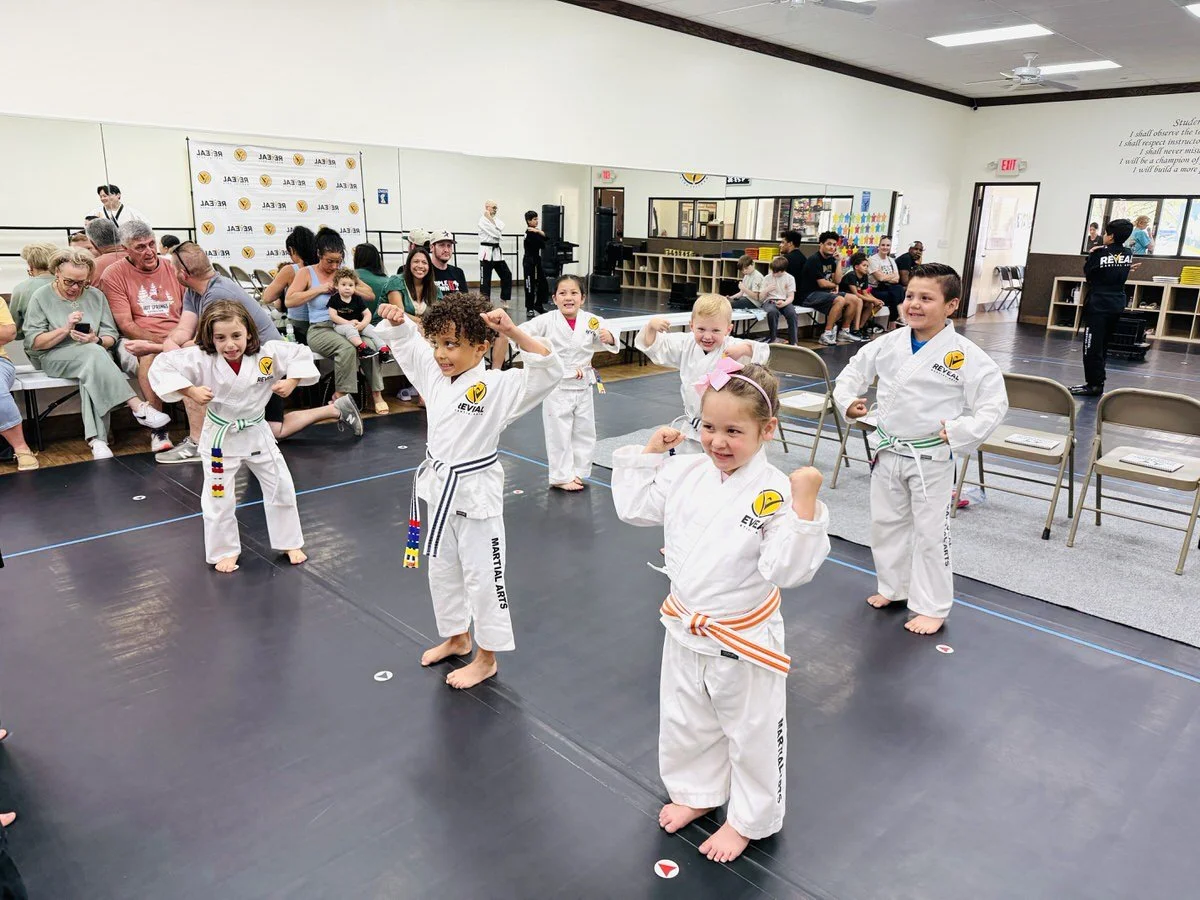
Why Martial Arts Helps Build Both
Martial arts is unique because it builds both confidence and self-esteem at the same time.
Students build confidence by learning new skills and improving.
Students build self-esteem by setting goals, earning belts, and not quitting when things get difficult.
Over time, students begin to see themselves differently. They start to believe:
- I am disciplined
- I am respectful
- I am confident
- I am a leader
- I can do hard things
That identity is what self-esteem really is.
A Message to Parents
Every parent wants their child to be confident. But even more important is helping a child build self-esteem — the belief that they are capable, strong, and able to handle challenges.
Activities that include structure, goal setting, mentorship, and long-term progress help children build both confidence and self-esteem over time.
Start With a Free Discovery Lesson
If you would like your child to build confidence and self-esteem in a positive, structured environment, we invite you to visit Reveal Martial Arts.
We offer classes for kids and teens at our Southlake, Alliance / Heritage Trace, and Haslet locations, and our programs focus on confidence, discipline, leadership, and life skills.
The best way to get started is with a Free Discovery Lesson.
Schedule your Free Discovery Lesson here:
https://www.idokarate.com/special
