
Are You Pushing Your Child Too Hard… Or Not Hard Enough?
For many parents, this is one of the hardest questions in all of parenting.
Am I expecting too much?
Am I expecting too little?
Am I pushing my child in a healthy way?
Or am I backing off too quickly?
Most thoughtful parents wrestle with this at some point.
Because no good parent wants to crush a child with pressure. But no wise parent wants to raise a child who folds the moment life gets difficult either.
That is the tension.
Push too hard, and a child can feel overwhelmed, discouraged, or disconnected.
Do not push enough, and a child may never discover what they are capable of.
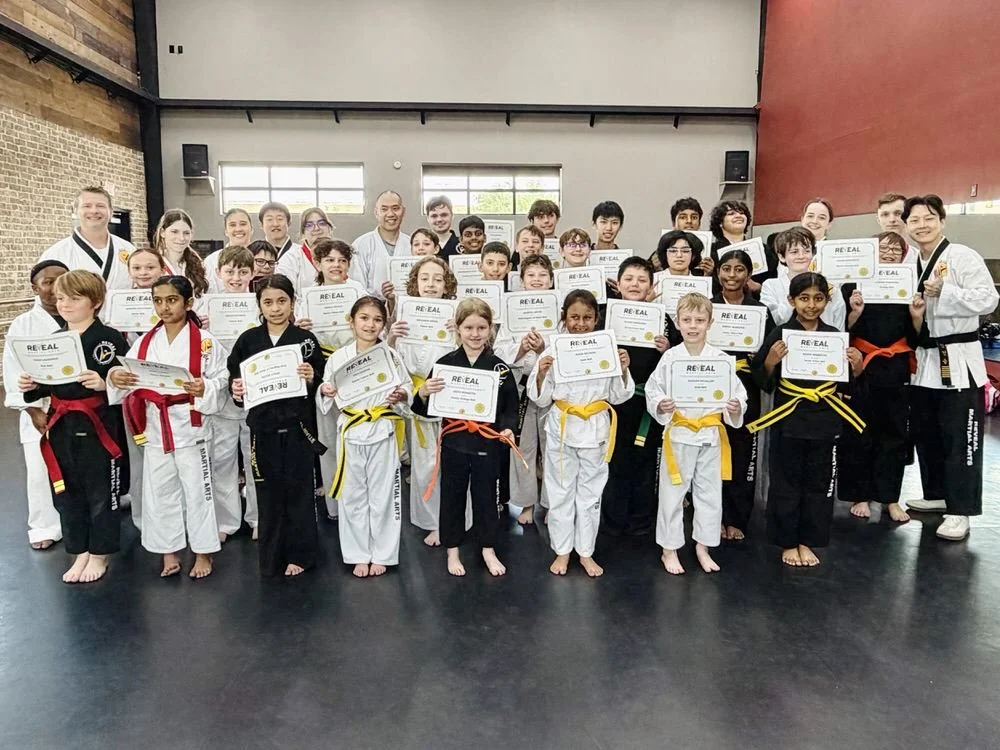
At Reveal Martial Arts, we see this tension all the time.
Some children need more patience, more confidence, and more emotional support before they can rise.
Other children are capable of far more than they are currently being asked to give.
That is why this conversation matters so much.
Because the goal is not to raise children under constant pressure, and it is not to keep them endlessly comfortable either.
The goal is to challenge them at the right level, in the right way, at the right time.
The Parenting Tightrope
Parenting often feels like walking a tightrope between two mistakes.
On one side is too much pressure.
That can look like:
- Constant correction without enough encouragement
- Expecting maturity beyond a child’s developmental level
- Making every mistake feel too big
- Turning every activity into high-stakes performance
- Using pressure in a way that creates fear instead of growth
On the other side is too little pressure.
That can look like:
- Backing off the moment a child feels uncomfortable
- Allowing quitting too quickly
- Lowering standards every time something gets hard
- Confusing temporary frustration with actual harm
- Protecting children from the very struggle that would help them grow
Neither extreme serves a child well.
Children do not thrive under constant emotional strain.
But they also do not become strong, confident, or resilient by avoiding effort, challenge, and discomfort.
Why This Is So Hard for Good Parents
This question is difficult precisely because love is involved.
When you love your child, you do not want to see them discouraged.
You do not want to see them frustrated.
You do not want to see them embarrassed.
You do not want them to fail.
So when your child resists something hard, shuts down, complains, or says they want to quit, it can be difficult to know what the right response should be.
Should you comfort them and pull back?
Should you hold the line?
Should you give it more time?
Should you expect more?
These are not small questions.
Because how parents respond in these moments shapes what children learn about effort, discomfort, identity, and perseverance.
The Wrong Test: “Does My Child Like This Right Now?”
One of the biggest mistakes parents can make is using a child’s immediate emotional reaction as the main measure of whether something is good for them.
Of course feelings matter. A child’s emotional state should never be ignored.
But temporary discomfort is not the same thing as danger.
A child may say they hate something because:
- They feel nervous
- They are embarrassed
- They are not instantly good at it
- They are being corrected
- They are being asked to try harder than they want to
None of that automatically means the experience is bad for them.
In fact, some of the most valuable experiences in a child’s life may not feel good in the moment.
That does not mean parents should ignore distress. It means they should learn to distinguish between unhealthy pressure and healthy challenge.
Healthy Challenge vs. Unhealthy Pressure
This distinction is critical.
Healthy challenge stretches a child.
It says:
- I know this is hard
- I am here with you
- You are capable of more than you think
- Let’s keep going
Unhealthy pressure overwhelms a child.
It says:
- You are failing me
- You are not enough unless you perform
- Mistakes are unacceptable
- Your worth depends on how well you do
Those are very different experiences.
Children grow under challenge when they still feel supported, respected, and emotionally safe.
They shrink under pressure when they feel shamed, constantly crushed, or unable to recover from mistakes.
Some Kids Need More of a Push Than Their Feelings Suggest
This is where many parents get stuck.
Some children protest almost any kind of demand.
They resist effort.
They complain early.
They get frustrated quickly.
They want out as soon as something feels hard.
If parents always interpret that reaction as a signal to back off, the child may slowly learn that discomfort is a valid reason to stop.
That can become a dangerous pattern.
Because later in life, that same child will face school pressure, social pressure, work pressure, disappointment, rejection, and tasks that are simply hard.
If they have never learned to stay with difficulty, those moments can hit them much harder.
Sometimes a child needs a loving adult to say:
I know this is hard, but you are doing it anyway.
I know you are frustrated, but you are not quitting today.
I know you are nervous, but I believe you can handle this.
That is not cruelty.
That is leadership.
Some Kids Also Need Less Pressure Than Adults Realize
At the same time, not every child needs more force.
Some children are already carrying a lot internally.
They may be highly self-critical.
They may be anxious.
They may fear disappointing adults.
They may melt down not because they are lazy, but because they feel flooded.
Those children often still need challenge, but they may need it delivered with more patience, more calm, and more emotional steadiness.
They may need adults to lower the emotional temperature without lowering the standard completely.
That is a major difference.
It means saying:
Take a breath.
Reset yourself.
You can do this.
We are not giving up, but we are going to do it in a way you can handle.
That kind of approach helps a child build capacity without feeling crushed.
The Goal Is Not Comfort. The Goal Is Capacity.
This is one of the most important ideas for parents to understand.
The goal is not to make sure your child always feels comfortable.
The goal is to help them build capacity.
Capacity to listen when corrected.
Capacity to stay calm under pressure.
Capacity to try again after failing.
Capacity to do things they do not feel like doing.
Capacity to stay with difficulty long enough to grow from it.
Children with greater capacity are more resilient.
More disciplined.
More confident.
More prepared for real life.
And that capacity is usually built through the right amount of challenge, repeated over time.
How Martial Arts Helps Parents Get This Balance Right
This is one reason martial arts can be so valuable.
At Reveal Martial Arts, children are consistently challenged, but within a structured environment where expectations, coaching, repetition, and support work together.
They are asked to:
- Pay attention
- Control their body and emotions
- Use a strong voice
- Push through nervousness
- Try again after mistakes
- Work toward long-term goals
That matters because many children need regular opportunities to be stretched in healthy ways.
Martial arts gives them that.
And it gives parents something important too: perspective.
Sometimes a parent cannot tell if they are expecting too much or too little because everything feels personal at home. In a structured training environment, it becomes easier to see what a child is actually capable of.
Often, children can do more than parents realize.
They simply need consistent expectations and the right coaching.
What Good Pushing Actually Looks Like
Healthy pushing usually does not look dramatic.
It often looks like calm consistency.
It looks like:
- Not panicking when your child gets frustrated
- Not rescuing them from every challenge
- Not shaming them for struggling
- Holding a reasonable standard
- Encouraging effort more than comfort
- Giving support without removing responsibility
That balance matters.
Children need empathy, but they also need expectation.
They need warmth, but they also need structure.
They need understanding, but they also need to be called upward.
Questions Parents Can Ask Themselves
When trying to figure out whether you are pushing too hard or not hard enough, a few questions can help:
- Is my child struggling because the challenge is truly too much, or because it is uncomfortable?
- Am I reacting to my child’s growth needs, or to my own discomfort as a parent?
- Do I tend to back off too quickly when emotions rise?
- Do I tend to create pressure without enough encouragement?
- Am I helping my child build strength, or just trying to keep peace in the moment?
Those questions are useful because they move parenting beyond impulse.
They help parents respond with more wisdom and less reactivity.
What Children Need Most
In the end, most children do not need parents who are endlessly soft or endlessly intense.
They need parents who are steady.
Parents who can stay calm when emotions rise.
Parents who can support without rescuing.
Parents who can challenge without crushing.
Parents who can see not just how a child feels in the moment, but who that child is becoming over time.
That is what makes the difference.
Because children are not built in one emotional moment.
They are built through repeated experiences of challenge, support, correction, and growth.
Why This Matters So Much
One day, your child will face pressure that does not come from you.
School will ask things of them.
Friendships will ask things of them.
Life will ask things of them.
They will need to stay steady when something is difficult.
They will need to recover when something goes wrong.
They will need to do hard things without someone making it easy.
That is why parents cannot afford to get trapped at either extreme.
Too much pressure can damage confidence.
Too little pressure can prevent confidence from ever being built.
The answer is not one or the other.
The answer is wise challenge.
Why Families Choose Reveal Martial Arts
Families in Southlake, Haslet, and the Alliance and Heritage Trace area often choose Reveal Martial Arts because they want an environment that helps their child grow stronger without being torn down.
They want structure, encouragement, discipline, confidence-building, and instructors who know how to challenge kids in productive ways.
That is what we work to provide every day.
If you are looking for kids martial arts classes in Southlake, Haslet, or the Alliance and Heritage Trace area that help children grow through the right balance of support and challenge, Reveal Martial Arts may be exactly what your family has been looking for.
Ready to help your child grow stronger with the right kind of challenge?
Click here to schedule your free trial class at Reveal Martial Arts.
