
What School Doesn’t Teach About Confidence (But Reveal Martial Arts Does)
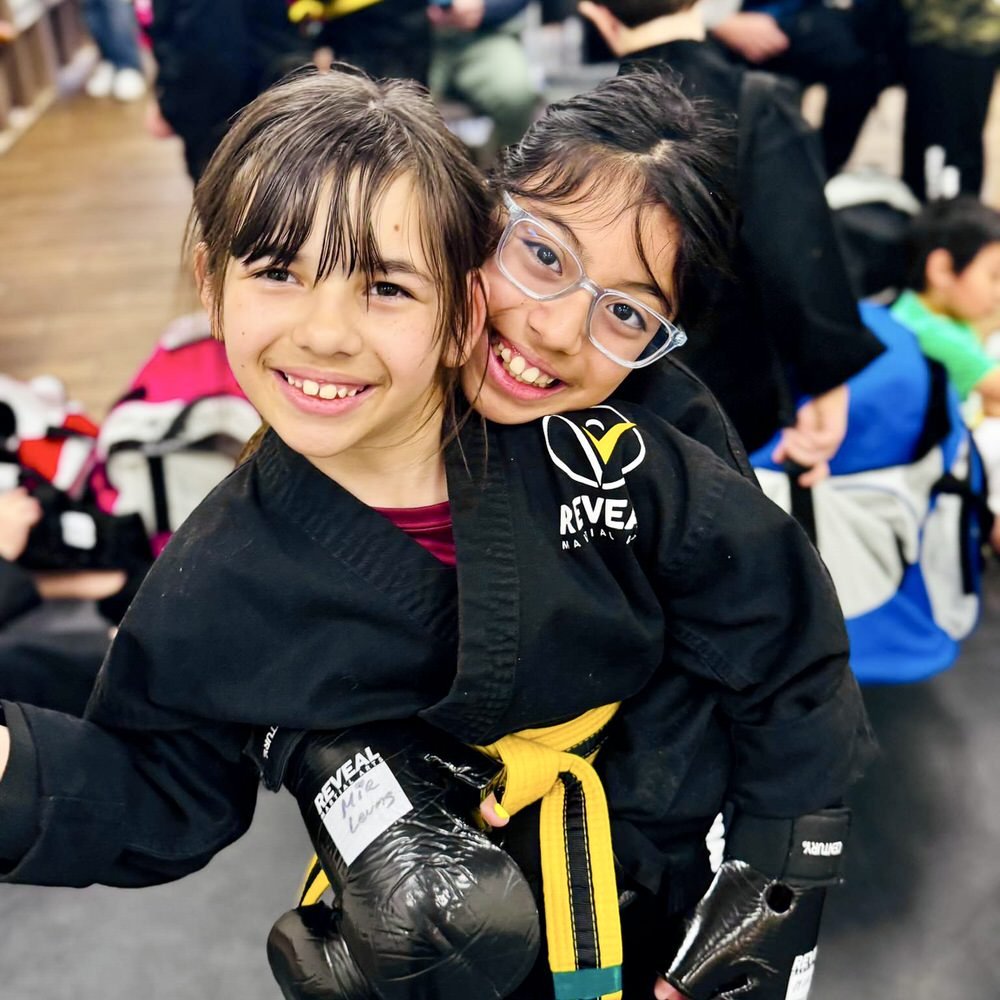
Most parents assume confidence is something children either have or don’t.
Some kids raise their hand easily.
Some speak up without hesitation.
Others shrink back, avoid attention, or second-guess themselves.
And when confidence is missing, parents often hear:
“They’ll grow out of it.”
“School will help with that.”
“Once they get older, they’ll be fine.”
But here’s the truth most schools can’t address directly:
Confidence isn’t taught academically.
And without intentional training, many kids never develop it fully.
Why School Struggles to Teach Confidence
Schools do many things well. They teach reading, math, science, and history. They create structure and routine. They manage large groups efficiently.
What they can’t do — by design — is teach confidence as a skill.
Here’s why:
Teachers are responsible for 20–30 students at a time
Curriculum is standardized and time-bound
Emotional development happens unevenly
There’s limited space for repetition, failure, and retrying
Public speaking and leadership are often optional, not required
So while schools reward confidence, they rarely build it.
The result?
Smart, capable kids who:
Know the answer but don’t raise their hand
Avoid speaking in groups
Get overwhelmed when corrected
Shut down under pressure
Doubt themselves even when they’re prepared
This isn’t a lack of intelligence.
It’s a lack of training.
Confidence Is Not a Personality Trait
This is where many parents get stuck.
They think:
“My child is just shy.”
“They’re introverted.”
“That’s just who they are.”
But confidence isn’t about being loud or outgoing.
Confidence is the ability to:
Stand tall under attention
Speak clearly when it matters
Make eye contact without discomfort
Handle mistakes without emotional collapse
Try again after failing
Those are skills — not personality traits.
And skills can be trained.
What Reveal Martial Arts Teaches That School Can’t
At Reveal Martial Arts, we see confidence develop through intentional repetition, not motivational speeches.
Here’s how it happens:
1. Physical Confidence Comes First
Before kids can feel confident socially, they need to feel confident in their body.
Martial arts teaches:
Balance
Posture
Coordination
Controlled movement
When a child learns how to stand, move, and breathe with control, their confidence rises naturally.
2. Visibility Becomes Normal
Many kids fear being seen.
In martial arts:
Students perform techniques in front of others
They respond verbally when addressed
They demonstrate skills publicly
They progress visibly through belt ranks
This repeated exposure removes fear — without forcing extroversion.
3. Mistakes Are Expected, Not Punished
In school, mistakes can feel permanent.
In martial arts, mistakes are part of the process.
Students learn:
Correction is normal
Feedback isn’t personal
Progress comes from adjustment
Trying again is expected
This rewires how kids respond to challenge — in school and beyond.
4. Leadership Is Practiced, Not Optional
At Reveal Martial Arts, confidence isn’t something kids “grow into.”
It’s trained deliberately.
Through our Leadership Program, students:
Speak in front of peers
Lead warm-ups
Mentor younger students
Practice eye contact and strong voice projection
Take responsibility for others
These experiences build confidence that transfers — to school presentations, interviews, and social situations.
What Confidence Looks Like in Real Life
Parents across Southlake, Alliance / Heritage Trace, and Haslet often notice changes like:
Stronger posture
Clearer speaking
Better eye contact
Less emotional reactivity
Willingness to try without reassurance
Not because their child changed personalities —
but because they gained internal stability.
Confidence isn’t bravado.
It’s calm capability.
Why Waiting Doesn’t Help
Confidence doesn’t appear automatically with age.
In fact, when kids avoid challenge early, fear often grows — not shrinks.
The longer a child avoids:
Speaking publicly
Being corrected
Performing in front of others
…the more intimidating those experiences become later.
Early exposure in a safe, structured environment matters.
A Final Thought for Parents
If your child struggles with confidence, it’s not a flaw.
It’s a signal.
A signal that they need:
Structured challenge
Supportive coaching
Repetition without judgment
Opportunities to be seen — safely
School teaches knowledge.
Confidence requires practice.
Want to See Confidence Built the Right Way?
If you’re in Southlake, Alliance / Heritage Trace, or Haslet, we invite you to see how confidence is developed — not forced — at Reveal Martial Arts.
A free trial class lets your child experience:
Supportive structure
Clear expectations
Positive coaching
Safe challenge
👉 Schedule a free Discovery Lesson now:
