
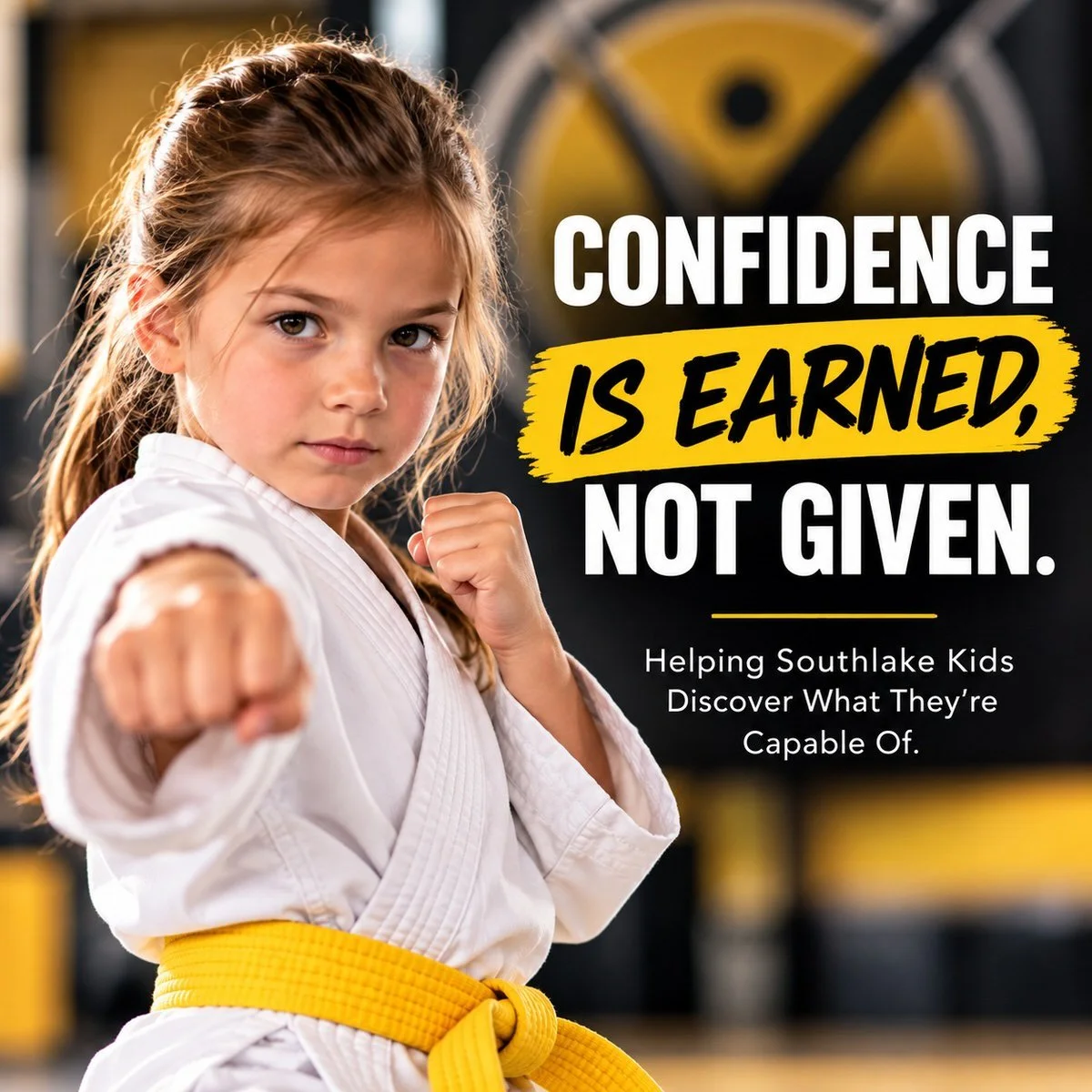
Every parent wants their child to grow up confident.
We want them to raise their hands in class, make friends easily, stand up for themselves, and face challenges without constantly doubting their abilities.
We tell them they're smart. We remind them they're talented. We encourage them to believe in themselves.
And there's nothing wrong with that. Children need to know their parents believe in them.
But there's an important distinction that sometimes gets overlooked:
We can give children encouragement. We can give them opportunities. We can give them unconditional love and support. But we cannot simply give them lasting confidence.
That kind of confidence develops when children begin to believe in their own abilities because they've experienced what they're capable of accomplishing.
And often, that discovery begins with doing something difficult.
Confidence Is Built Through Experience, Not Just Encouragement
Imagine two children standing in front of a challenging task.
One has repeatedly been told, "You're amazing! You can do anything!"
The other has been encouraged to practice, make mistakes, try again, and eventually accomplish something they initially struggled with.
Both children have received encouragement. But the second child also has something powerful: personal evidence that effort can lead to improvement.
When that child encounters another challenge, they can remember what happened the last time something seemed impossible.
I've struggled before. I've figured things out before. Maybe I can do it again.
That's the foundation of genuine confidence.
Not the belief that everything will be easy, but the belief that difficulties can be faced and overcome.
Why Southlake Kids Need Opportunities to Struggle
Southlake is a community filled with opportunities for children.
Our schools, athletic programs, extracurricular activities, and involved families create an environment where kids can explore their interests and pursue ambitious goals.
As parents, we naturally want to provide the best opportunities we can.
But in our desire to help children succeed, it's sometimes tempting to remove obstacles before they have a chance to work through them.
We remind them repeatedly about assignments. We step in when they're frustrated. We try to prevent disappointment because we know how painful it can be to watch our children struggle.
Those instincts come from a good place.
Yet some of the most valuable learning experiences happen when children encounter manageable challenges and discover that they can handle them.
Learning to ride a bicycle is a simple example.
We can explain balance. We can demonstrate how to pedal. We can encourage our children and hold the bicycle steady while they're learning.
But eventually, they have to pedal on their own.
And when they finally ride independently, the excitement isn't just about riding a bicycle.
It's about realizing, I did that myself!
Confidence often grows in the space between "I can't do this" and "I figured it out."
The Difference Between Self-Esteem and Confidence
There's another distinction worth understanding.
A child's worth should never depend on grades, athletic performance, popularity, or accomplishments.
Children deserve love, respect, and belonging regardless of whether they succeed or fail.
But confidence in a particular ability is different.
A child may feel secure and valued while still being nervous about speaking in public, learning a new sport, or approaching an unfamiliar group of people.
And that's perfectly normal.
Confidence develops differently across different areas of life.
A child who is confident in mathematics may feel uncertain on a soccer field. A talented athlete may become nervous when asked to speak in front of classmates.
That's why telling children to "just be confident" often isn't enough.
They need opportunities to practice the very things that make them uncomfortable, with appropriate guidance and encouragement along the way.
What Martial Arts Teaches Children About Earning Confidence
One of the things we appreciate most about teaching children at Reveal Martial Arts in Southlake is watching their confidence develop over time.
It rarely happens all at once.
A new student might walk into their first class feeling nervous.
They may not know how to stand correctly, remember the movements, or understand what the instructor is asking them to do.
And that's okay.
We don't expect beginners to arrive with confidence or skill. We help them develop both.
At first, something as simple as learning a basic stance or performing a kick correctly can feel challenging.
But with practice, the unfamiliar becomes familiar.
Movements become more coordinated. Instructions become easier to follow. Students begin remembering techniques without constant reminders.
Eventually, a child who once hesitated to participate may volunteer to demonstrate a technique in front of the class.
That transformation doesn't happen because someone repeatedly tells the child they're confident.
It happens because the child has accumulated experiences that give them reasons to believe in themselves.
The Belt System Makes Progress Visible
One reason traditional martial arts can be effective for developing confidence is that progress becomes something children can see.
The journey from white belt toward black belt involves learning new skills, practicing consistently, and demonstrating increasing levels of proficiency.
Each new rank represents another step in that journey.
But the real value isn't the color of the belt.
It's what the student experiences while working toward it.
Sometimes a technique takes weeks to learn. Sometimes students make mistakes during practice. Sometimes they discover that they aren't as prepared for a challenge as they thought.
Those moments create opportunities to develop perseverance, patience, and responsibility.
When students eventually demonstrate improvement, their achievement means more because they understand the effort involved.
A belt can be a meaningful symbol of progress, but the deeper reward is knowing what it took to get there.
Confidence Requires More Than Physical Skills
Confidence isn't only about being able to perform a difficult kick or defend yourself.
It's also about being comfortable speaking, asking questions, making decisions, and interacting with others.
Think about how many children hesitate to raise their hands in school because they're afraid of giving the wrong answer.
Or how difficult it can be for a shy child to introduce themselves to someone new.
These situations may seem small to adults, but they can feel significant to children.
At Reveal Martial Arts, we incorporate communication and leadership development into our training.
Students practice standing tall, making eye contact, and speaking with a clear voice.
Our Leadership Program gives students additional opportunities to develop communication skills, take responsibility, and become more comfortable speaking in front of others.
These abilities improve through repetition, just like physical techniques.
A child doesn't have to become naturally outgoing to become a confident communicator.
They simply need opportunities to practice in an environment where they feel supported and encouraged to improve.
Why Making Mistakes Is Part of Becoming Confident
One of the biggest obstacles to confidence is the fear of making mistakes.
Some children would rather avoid trying something new than risk doing it incorrectly.
They may be capable of much more than they demonstrate, but their fear of failure keeps them from participating.
This is where a healthy learning environment makes an enormous difference.
In martial arts, mistakes are a normal part of training.
Students forget movements. They lose their balance. They perform techniques incorrectly and receive corrections from their instructors.
Then they try again.
Over time, they begin to understand that a mistake isn't proof that they're incapable.
It's information they can use to improve.
That lesson can be especially valuable outside the martial arts studio.
A child who becomes more comfortable making mistakes may be more willing to attempt difficult schoolwork, try out for an activity, or participate in an unfamiliar situation.
Confidence doesn't mean never feeling embarrassed, nervous, or disappointed.
It means learning that those feelings don't have to prevent us from taking action.
Five Ways Parents Can Help Children Develop Genuine Confidence
Martial arts is one way to give children opportunities to develop confidence, but the same principles can be practiced at home.
1. Praise Effort, Preparation, and Improvement
Instead of focusing only on how talented or smart your child is, recognize the actions that contribute to progress.
"I noticed how much you practiced that."
"You kept working even when it was frustrating."
"You've improved since the last time you tried."
This helps children connect their actions with their development.
2. Let Them Work Through Manageable Challenges
When your child encounters a problem, resist the urge to immediately solve it for them.
Ask questions. Offer guidance. Help them consider possible solutions.
Then give them an opportunity to try.
The goal isn't to leave children struggling without support. It's to provide enough support that they can gradually become more independent.
3. Normalize Mistakes
Children benefit from seeing adults make mistakes, acknowledge them, and move forward.
When something doesn't work out, talk about what can be learned and what might be done differently next time.
Help your child understand that an unsuccessful attempt doesn't define who they are.
4. Encourage Activities That Provide Meaningful Progress
Look for activities where your child can develop skills over time and recognize improvement.
That might be music, art, athletics, martial arts, or another interest.
The important ingredients are appropriate challenges, consistent practice, constructive feedback, and opportunities to experience achievement.
5. Celebrate Courage, Not Just Success
Sometimes the most important accomplishment is simply being willing to try.
A shy child who introduces themselves to someone new has taken a meaningful step.
A nervous student who volunteers to demonstrate a technique has shown courage, even if the demonstration isn't perfect.
Recognizing those moments encourages children to keep taking positive risks.
Confidence Is Something Children Carry Into the Future
As parents, we can't prepare our children for every challenge they'll encounter.
We won't always be there when they face a difficult test, an uncomfortable social situation, disappointment, or a decision that requires courage.
What we can do is help them develop the skills and experiences they'll draw upon when those moments arrive.
That's one reason we believe the lessons children learn through martial arts can be so valuable.
The punches and kicks are important parts of training, but the larger goal is developing young people who understand the value of effort, discipline, respect, and perseverance.
Through our kids' martial arts programs, students have opportunities to practice these qualities while working toward meaningful personal goals.
And while this article focuses on families in Southlake, we also welcome children at our Alliance/North Fort Worth and Haslet studios.
We Can't Give Our Children Confidence. But We Can Help Them Build It.
Perhaps the most important thing to remember is that confident children aren't necessarily the loudest, most outgoing, or most naturally talented.
Sometimes they're the quiet children who have learned to speak up when it matters.
Sometimes they're the children who once struggled with physical coordination but kept practicing until they improved.
And sometimes they're the children who have experienced failure, disappointment, and frustration—and discovered that they can keep moving forward.
Those experiences help build a kind of confidence that encouragement alone cannot create.
As parents, our role isn't to eliminate every challenge or guarantee every success.
It's to provide love, guidance, opportunities, and the encouragement children need to discover their own capabilities.
Because the most meaningful confidence isn't something children are handed. It's something they develop through the things they learn to do.
If you'd like to see how martial arts can help your child develop confidence, discipline, and perseverance, we invite you to experience a class at Reveal Martial Arts.
Book a FREE Discovery Lesson and let your child take the first step toward discovering what they're capable of.
Reveal Your Champion.
