
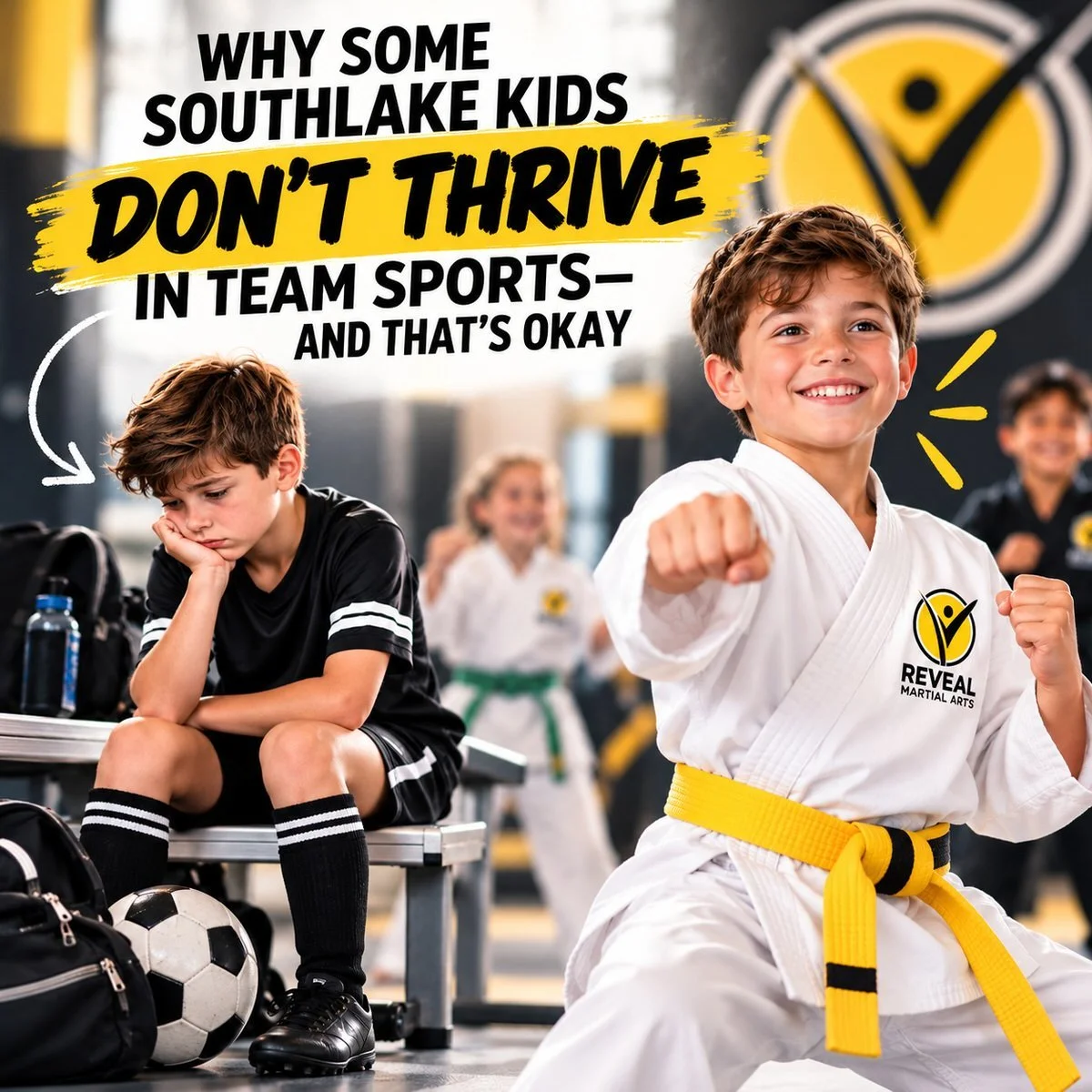
Southlake is a community that loves its sports.
From Friday night football to youth baseball, soccer, basketball, and competitive cheer, there are countless opportunities for children to get involved, make friends, and develop their athletic abilities.
And for many kids, team sports are a wonderful experience.
But what happens when your child doesn't seem to enjoy them?
Maybe your son spends most of his soccer games on the sidelines. Perhaps your daughter is athletic but feels discouraged because she rarely gets to play. Or maybe your child simply doesn't enjoy the pressure of competing for a position on the team.
As parents, we naturally want our children to be active, develop friendships, learn teamwork, and experience the satisfaction of accomplishing something difficult.
But here's something important to remember:
A child who doesn't thrive in team sports isn't necessarily a child who doesn't enjoy sports. They may simply need a different environment to discover what they're capable of.
Every Child Has a Different Way of Shining
Some children love the excitement of being part of a team. They thrive on competition, enjoy the camaraderie, and feel energized by the atmosphere of a big game.
Others are different.
They might be quieter, more independent, or less comfortable competing for attention. Some prefer activities where they can measure their progress against their own previous performance rather than against their teammates.
And some children simply haven't found an activity that makes them excited to participate.
None of these differences mean a child lacks athletic ability, determination, or potential.
It just means children aren't all motivated by the same things.
The challenge is finding an environment where your child feels comfortable enough to try, confident enough to make mistakes, and motivated enough to keep improving.
When Playing Time Determines Participation
One of the realities of team sports is that not every child gets the same opportunity to participate.
Coaches have difficult decisions to make. Teams want to win, positions are limited, and some children develop their athletic skills earlier than others.
For a child who spends much of the season on the bench, however, the experience can be discouraging.
Imagine practicing several times a week, showing up for every game, and putting in your best effort, only to spend most of the game watching everyone else play.
Some children respond by working harder. Others gradually lose interest.
And while learning to handle disappointment is an important life lesson, we also need to recognize that limited playing time doesn't necessarily reflect a child's willingness to work or ability to improve.
Sometimes, what a child needs most is an activity where participation isn't dependent on being selected for a position.
What If Your Child Could Participate Every Time?
This is one of the differences parents often appreciate about martial arts.
At Reveal Martial Arts in Southlake, every student participates in class.
There are no starting lineups. No bench. No waiting for the coach to put you into the game.
Students practice their techniques, develop coordination, work with training partners, and receive instruction appropriate to their experience.
A beginner doesn't need to be the strongest or fastest student in the room to participate meaningfully.
And because martial arts training emphasizes individual development, children have opportunities to recognize their own progress.
A kick that seemed impossible a month ago becomes easier. A student who struggled to remember a sequence of movements performs it confidently. A child who once avoided speaking in front of others begins answering questions with a clear, strong voice.
These may seem like small victories.
But for a child who has struggled to feel successful in other activities, they can mean a great deal.
Progress Doesn't Have to Depend on Being Better Than Someone Else
In many competitive sports, children naturally compare themselves with others.
Who's the fastest runner? Who scores the most goals? Who made the select team?
Healthy competition can be valuable. It teaches children to handle challenges, work hard, and develop resilience.
But constant comparison isn't equally motivating for everyone.
One of the strengths of traditional martial arts is that students have a visible path for personal advancement.
The belt system provides milestones that help children recognize their development over time.
A student begins as a white belt and gradually works toward more advanced ranks by learning techniques, practicing consistently, and demonstrating improvement.
The process isn't always easy. Students must learn to focus, persevere through challenges, and take responsibility for their preparation.
But their progress isn't determined by whether they're the best athlete in the class.
The goal is to become better than the person they were yesterday.
For children who haven't experienced much success in traditional sports, that change in perspective can be powerful.
Martial Arts Still Teaches Teamwork
There's a common misconception that martial arts is purely an individual activity.
While each student works toward personal goals, training also involves cooperation, encouragement, and responsibility toward others.
Students practice with partners, help classmates improve, and learn to respect people of different ages and skill levels.
They discover that their actions affect the people around them.
At Reveal Martial Arts, teamwork is one of the life skills we emphasize alongside Courtesy, Integrity, Perseverance, Self-Control, and Indomitable Spirit.
Students learn that being a good teammate isn't just about winning together.
It's about supporting others, showing respect, and contributing to a positive environment.
For some children, this combination of individual progress and group participation offers the balance they've been missing.
Confidence Grows When Children Experience Success
Think about the activities your child genuinely enjoys.
Chances are, they're activities where your child feels capable, connected, or excited about improving.
That doesn't mean everything should come easily.
In fact, some of the most meaningful confidence comes from accomplishing something that initially seemed difficult.
A child who struggles with a martial arts technique might practice it repeatedly before finally getting it right.
A student who feels nervous about performing in front of classmates might gradually become comfortable demonstrating techniques.
Over time, those experiences can help children develop a different understanding of themselves.
Instead of thinking, I'm not very good at sports, they may begin to realize:
I can learn difficult things.
I can improve when I practice.
I can do more than I thought.
And those lessons extend well beyond martial arts.
They can influence how children approach schoolwork, friendships, responsibilities, and new challenges.
What About Kids Who Aren't Naturally Athletic?
Some parents hesitate to enroll their children in martial arts because they assume their child isn't athletic enough.
But martial arts isn't reserved for children who already have excellent coordination, flexibility, or physical fitness.
Those are abilities students can develop through training.
A child who struggles with balance can improve their balance.
A child who has difficulty remembering movements can develop better coordination and concentration through practice.
And a child who feels uncomfortable trying physical activities can gradually become more confident as they gain experience.
Every student starts somewhere.
What matters most isn't where a child begins, but whether they're willing to learn and continue improving.
Your Child Doesn't Have to Choose Between Martial Arts and Team Sports
It's also important to recognize that martial arts doesn't have to replace other activities.
Many of our students enjoy football, baseball, soccer, basketball, and other sports while continuing their martial arts training.
The activities can complement each other.
Martial arts develops balance, coordination, body awareness, flexibility, and concentration, abilities that can be useful in many athletic pursuits.
Just as importantly, the discipline and perseverance children practice in martial arts can support their approach to other activities.
For some families, martial arts becomes their child's primary activity.
For others, it's a valuable addition to an already active schedule.
Both approaches can work.
The goal isn't to convince every child to leave team sports.
It's to help each child find an activity that supports their growth and makes them excited to keep learning.
How Do You Know When It's Time to Try Something Different?
If your child seems unhappy with their current activity, start by having a conversation.
Ask what they enjoy, what frustrates them, and whether there's something else they'd like to try.
Sometimes a difficult season is simply part of learning commitment and perseverance. Children shouldn't automatically quit an activity whenever things become challenging.
But there's also a difference between helping a child overcome a challenge and expecting them to remain in an environment that consistently leaves them discouraged.
Pay attention to how your child feels before and after practices.
Do they look forward to participating? Are they developing friendships? Do they feel that their effort matters?
Most importantly, are they growing?
The answers can help you determine whether they need encouragement to continue or an opportunity to explore something new.
Finding the Right Activity for Your Child in Southlake
Southlake families have access to an incredible variety of youth activities.
And that's a good thing.
Children benefit from having opportunities to discover their interests, develop their abilities, and find communities where they belong.
For some, that will happen on a football field.
For others, it might be through music, art, dance, or theater.
And for many children, martial arts provides the combination of physical activity, personal achievement, friendships, and character development they've been looking for.
At Reveal Martial Arts, we've spent more than two decades helping children discover what they're capable of through traditional martial arts training.
Our kids' martial arts program emphasizes more than punches and kicks. We focus on developing confidence, discipline, perseverance, respect, and the life skills children need as they grow.
In addition to our Southlake studio, we welcome families at our Alliance/North Fort Worth and Haslet locations.
Sometimes, the Right Activity Changes Everything
Your child doesn't need to be the star player, the fastest runner, or the most naturally gifted athlete to experience the benefits of physical activity.
They need an environment where they feel encouraged to participate, challenged to improve, and recognized for their effort.
Because sometimes, a child who hasn't found their place in team sports discovers an entirely different side of themselves when given the opportunity to try something new.
And that discovery can be the beginning of something extraordinary.
If you're wondering whether martial arts might be a good fit for your child, we invite you to experience a class at Reveal Martial Arts.
Book a FREE Discovery Lesson and see what your child can accomplish.
Reveal Your Champion.
